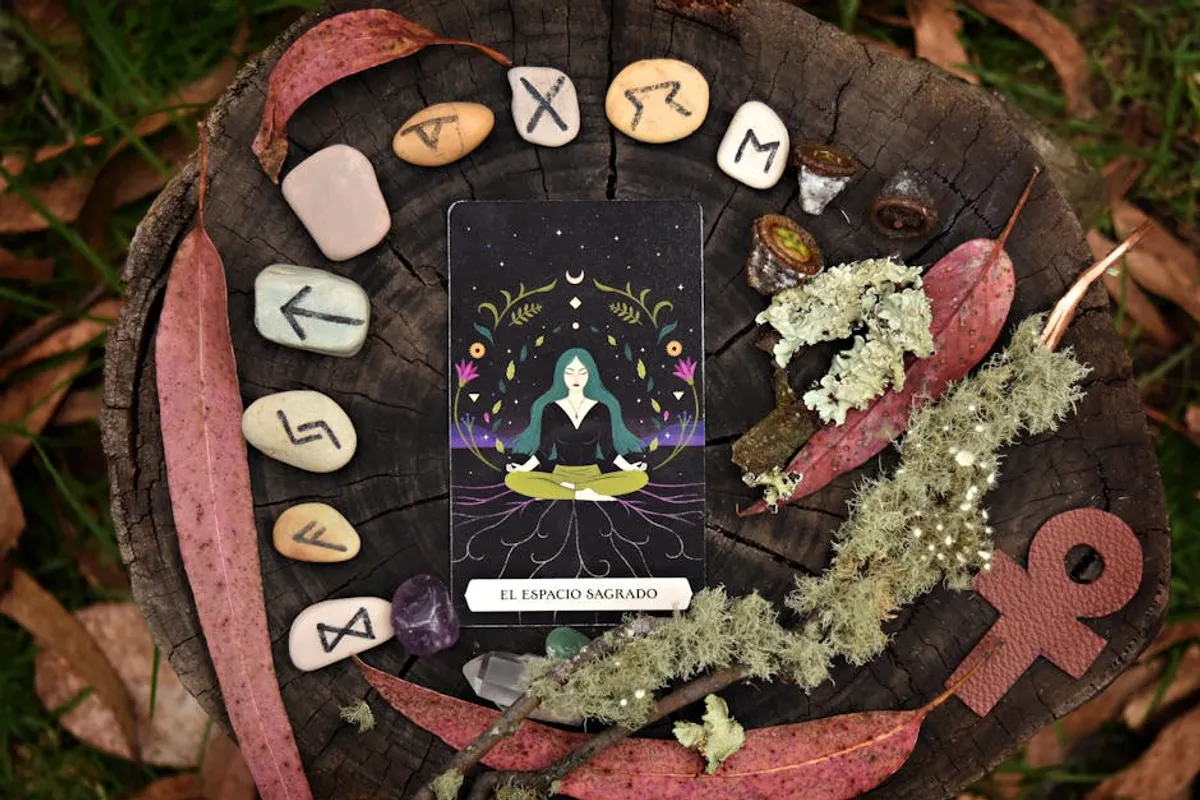
For content creators, marketers, and publishers engaging with historical or niche spiritual themes, a precise understanding of source material is crucial. Misrepresenting symbols or traditions can alienate a target audience and undermine content authority. This exploration of runes within Norse spirituality provides a foundational context, moving beyond superficial interpretations to detail their historical function, linguistic structure, and multifaceted spiritual significance. Grasping these distinctions is essential for developing authentic, resonant content that respects the depth of the subject matter and builds genuine audience trust.
The Historical and Spiritual Context of Runes
Runes are more than just an ancient alphabet; they represent a complex system of written language, symbolic meaning, and spiritual significance within pre-Christian Germanic and Norse cultures. Originating around the 1st to 2nd centuries CE, these characters served practical purposes like inscription on tools, weapons, and monuments, but also held profound associations with cosmology, divination, and protective magic. Unlike modern alphabets, each rune possessed a distinct name and a specific conceptual meaning that extended beyond its phonetic value, making them potent symbols in their own right.
Their use was deeply intertwined with the worldview of the people who created them. Runes were believed to be gifts from the gods, particularly Odin, and were thought to contain inherent power. Inscriptions were not merely records but active invocations, meant to influence events, convey blessings, or ward off harm. Understanding a rune's meaning, therefore, requires looking at its linguistic origin, its associated concepts, and its traditional application in spiritual and magical practices. This holistic view prevents reductionist interpretations and ensures accuracy when discussing their role in Norse spirituality.
The Elder Futhark: Structure and Core Meanings
The Elder Futhark, consisting of 24 runes, is the oldest and most complete runic alphabet, used from approximately 150 to 800 CE. It is divided into three groups, or "aettir" (families), each containing eight runes. These divisions are not arbitrary; they reflect thematic groupings and provide a structured framework for understanding the interconnectedness of the runes' meanings.
Fehu to Wunjo: The First Aett of Freyr
This aett is often associated with creation, material wealth, and the initial stages of development. It begins with Fehu, representing cattle and wealth, symbolizing prosperity and new beginnings. Uruz signifies primal strength, vitality, and untamed potential. Thurisaz denotes protection, conflict, and destructive forces, often linked to giants. Ansuz is the rune of divine inspiration, communication, and authority, associated with Odin. Raido represents journey, movement, and order, both physical and spiritual. Kenaz symbolizes knowledge, creativity, and controlled fire. Gebo signifies gifts, partnership, and balance, emphasizing reciprocity. Wunjo concludes this aett, representing joy, fellowship, and success.
Hagalaz to Sowilo: The Second Aett of Hagal
The second aett frequently addresses challenges, transformation, and natural forces. Hagalaz, the hail rune, symbolizes disruption, sudden change, and destructive natural power. Nauthiz represents need, constraint, and endurance, often forcing self-reliance. Isa, ice, signifies stagnation, delay, and introspection. Jera, harvest or year, denotes cycles, fruition, and patience leading to reward. Eihwaz, the yew tree, symbolizes resilience, death, and rebirth, connecting realms. Perthro, often linked to fate or mystery, represents the unknown and hidden potential. Algiz, elk sedge, signifies protection, defense, and connection to the divine. Sowilo, the sun, represents success, honor, and life-giving energy, guiding through darkness.
Tiwaz to Othala: The Third Aett of Tyr
The final aett focuses on societal structures, justice, and spiritual inheritance. Tiwaz, named after the god Tyr, symbolizes justice, sacrifice, and leadership. Berkana, the birch goddess, represents growth, fertility, and new beginnings within a protective context. Ehwaz, the horse, signifies movement, partnership, and trust. Mannaz, humanity, represents the self, community, and human potential. Laguz, water, denotes intuition, flow, and the subconscious mind. Ingwaz, the god Ing, symbolizes fertility, completion, and inner growth. Dagaz, day, represents breakthrough, awakening, and new possibilities. Othala, ancestral property, signifies inheritance, home, and spiritual lineage, marking the culmination of the Futhark's journey.
Beyond Writing: Runes in Divination and Protection
The spiritual utility of runes extended far beyond their function as a writing system. Historical evidence, including sagas and archaeological finds, suggests their use in divination, a practice of seeking insight into future events or hidden knowledge. Runes were often cast or drawn to interpret omens or gain guidance. This was not a simple fortune-telling, but a method to align with cosmic forces and understand the will of the gods or the flow of fate.
Moreover, runes were employed in various forms of protective and blessing magic. Inscriptions on amulets, weapons, and household items were believed to imbue them with specific powers. For example, the Algiz rune might be carved for defense, or a combination of runes used to ensure a safe journey or a bountiful harvest. The power was thought to reside not just in the symbol itself, but in the intention and knowledge of the practitioner, who understood the deep meaning and cosmic connections of each rune.
Pro Tip: When developing content or products related to Norse spirituality, ensure any use of runes is historically and culturally informed. Superficial application without understanding their deep, complex meanings risks misrepresentation, which can undermine credibility and alienate audiences who value authenticity.
Navigating Modern Interpretations and Cultural Sensitivity
The study of runes has seen various revivals and interpretations, particularly in the modern era. While contemporary practices often draw inspiration from historical sources, they also incorporate new perspectives that may deviate significantly from ancient Norse spirituality. For content creators, distinguishing between historically attested uses and modern interpretations is critical for maintaining accuracy and respecting cultural origins.
- Historical Accuracy: Prioritize primary sources and academic research on runology and Old Norse studies.
- Contextual Understanding: Recognize that runes were part of a living, evolving spiritual tradition, not a static system.
- Avoid Appropriation: Be mindful of the potential for cultural appropriation, especially when commercializing symbols with deep spiritual significance.
- Nuance Over Simplification: Resist reducing complex meanings to simplistic, universal interpretations that strip away their original cultural context.
Engaging with runes requires sensitivity. Their historical connection to specific cultures and their occasional misuse in certain modern contexts (e.g., by white supremacist groups, which is a perversion of their original meaning) necessitates careful handling. Authentic engagement means respecting the source culture and providing context that clarifies their true historical and spiritual significance.
Strategic Engagement with Norse Spiritual Symbolism
For publishers and marketers, understanding the true meaning of runes offers opportunities to create deeply resonant and accurate content. This knowledge can inform:
Content Development: Crafting articles, books, or digital resources that explore Norse mythology, history, and spirituality with academic rigor. This builds authority and attracts a dedicated audience seeking depth.
Product Design: Incorporating rune symbolism into merchandise (e.g., jewelry, apparel, home decor) in a way that respects their cultural origin and meaning. This moves beyond generic "Viking" aesthetics to offer items with genuine narrative and spiritual weight.
Audience Targeting: Identifying and engaging niche audiences interested in historical accuracy, pagan spirituality, or cultural heritage. Content that demonstrates a nuanced understanding of runes can establish credibility within these communities.
Educational Initiatives: Developing educational materials that teach about Norse history and runic systems, fostering appreciation and preventing misinterpretation.
By investing in accurate research and presenting runes in their proper historical and spiritual context, content creators can avoid common pitfalls and build a reputation for authenticity and respect. This approach not only serves the audience but also upholds the integrity of the subject matter.
Frequently Asked Questions About Runes
What is the primary difference between runes and a modern alphabet?
Unlike modern alphabets primarily serving phonetic transcription, each rune in systems like the Elder Futhark possessed a distinct name, a phonetic value, and a rich conceptual meaning, making it a powerful symbol beyond mere writing.
Were runes used exclusively for writing?
No, runes were also widely used for spiritual purposes, including divination, seeking guidance, and in magical practices for protection, blessings, or influencing outcomes, often inscribed on objects or monuments.
How many runes are in the Elder Futhark?
The Elder Futhark consists of 24 runes, traditionally divided into three groups of eight, known as aettir, each with thematic connections.
Is it appropriate to use runes in modern commercial products?
Using runes in commercial products requires careful consideration of historical accuracy and cultural sensitivity. Products should reflect a genuine understanding of their meanings and origins to avoid misrepresentation or appropriation.
Leave a note in the margin
Thoughtful disagreement welcomed. Promotional links quietly removed. First-time notes are read before they appear.