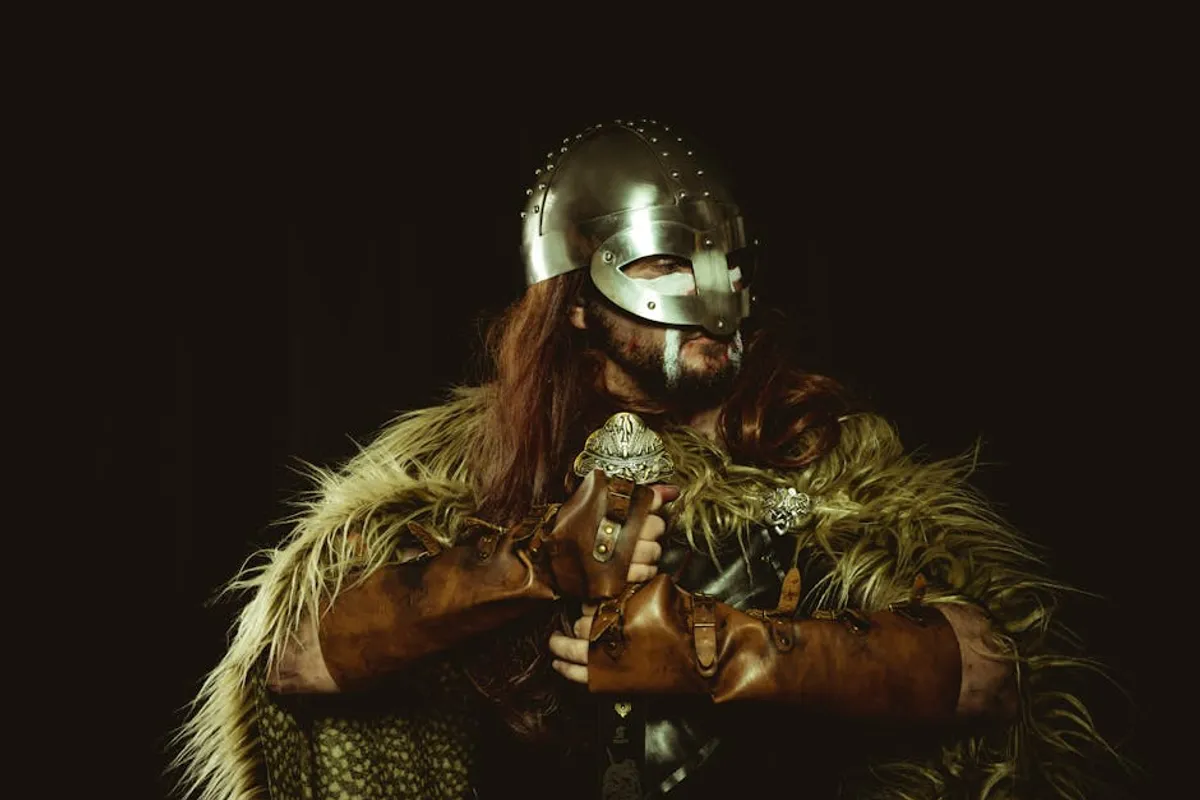
The commercial application of Norse symbols requires a precise understanding of their historical meanings and the evolution of their cultural interpretation. For brands, designers, and content creators, the distinction between authentic symbolism and common misunderstandings is not merely academic; it directly impacts market reception, brand integrity, and the avoidance of cultural missteps. Leveraging Norse iconography effectively means moving beyond superficial aesthetics to engage with the specific cultural weight each symbol carries, ensuring products and marketing resonate authentically with an informed audience rather than risking misrepresentation or, worse, unintended association with problematic modern groups.
Decoding Key Norse Symbols
Many widely recognized "Norse" symbols possess nuanced meanings that often differ from popular contemporary interpretations. Accuracy in their use hinges on understanding their origins and traditional contexts.
Mjölnir: Protection and Consecration
Thor's Hammer, Mjölnir, is perhaps the most universally recognized Norse symbol. Its primary historical association is with protection, consecration, and the blessing of people, places, and events. Archaeological finds show Mjölnir amulets were worn for personal protection and as a sign of allegiance to the old gods, particularly during the Christianization period. Its power was not solely destructive; it was also a tool for hallowing and bringing fertility.
Misunderstanding: Often perceived solely as a symbol of brute force or a generic "Viking warrior" emblem. While Thor is a powerful god, his hammer’s functions extended beyond combat to encompass the maintenance of order and well-being.
The Valknut: Odin's Knot of the Slain
The Valknut (Old Norse: valr, "slain warriors" + knut, "knot") is a symbol comprising three interlocked triangles. Its precise meaning remains debated among scholars, but it is consistently associated with Odin, death, and the afterlife. It frequently appears on memorial stones and funerary contexts, suggesting a connection to the transition from life to death, or Odin's power over destiny and the fallen. It may represent the binding and unbinding of the mind, or the power to inspire courage in battle.
Misunderstanding: Frequently used as a generic "Viking symbol" of strength or interconnectedness without acknowledging its specific, often somber, associations with Odin and death. Its complex meaning makes casual application risky without deeper understanding.
Vegvisir: A Modern Compass for Guidance
The Vegvisir, often called the "Runic Compass" or "Viking Compass," is a stave-like symbol intended to guide its bearer through rough weather. The popular phrase associated with it is, "If this sign is carried, one will never lose one's way in storms or bad weather, even when the way is not known."
Misunderstanding: Despite its popularity, the Vegvisir is not an ancient Viking Age symbol. It originates from the Huld Manuscript, an Icelandic grimoire dating to 1860, and other similar 19th-century Icelandic magical texts. While culturally relevant to Icelandic folk magic, presenting it as an authentic Viking-era symbol is historically inaccurate.
The Helm of Awe (Ægishjálmr): Psychological Protection
The Ægishjálmr, or Helm of Awe, is a magical stave described in several Icelandic sagas and grimoires. Its purpose was to instill fear in enemies and provide protection to the wearer, essentially a psychological weapon. It was not a physical helmet but a symbol drawn on the forehead or carried, intended to confer invincibility and power over adversaries.
Misunderstanding: Like the Vegvisir, the Ægishjálmr is primarily a post-Viking Age symbol, appearing in later Icelandic magical traditions. Its use as a mere decorative element without understanding its specific magical, protective, and fear-inducing context misses its true significance and historical placement.
Yggdrasil: Cosmic Connection and Life
Yggdrasil is the immense ash tree that connects the nine worlds in Norse cosmology. It represents the entire cosmos, embodying life, interconnectedness, knowledge, and fate. Its roots extend into different realms, and various creatures live within its branches and around its trunk. It is a central element of the Norse worldview.
Misunderstanding: While often correctly identified as the "World Tree" or "Tree of Life," its specific Norse context is sometimes diluted. It's not just a generic tree; it's a dynamic, living entity fundamental to the structure and function of the Norse universe, with specific realms and beings tied to its structure.
Runes: More Than Letters
Runes were the alphabetic characters used by Germanic peoples, including the Norse, from the 2nd to the 16th centuries. Beyond their phonetic function, individual runes were believed to possess magical properties and specific meanings when used for divination, inscriptions, or charms. Each rune represented a concept, a god, or a force of nature.
Misunderstanding:
- Treating runes as mere decorative fonts without understanding their individual meanings or the historical context of runic inscriptions.
- Misinterpreting individual rune meanings based on modern, generalized interpretations rather than historical or scholarly consensus.
- Creating "bindrunes" (two or more runes combined) without knowledge of traditional runic magic principles, potentially leading to nonsensical or unintended meanings.
Pro Tip: Before incorporating any Norse symbol into a commercial product or branding, consult academic sources, archaeological records, or reputable cultural historians. Avoid relying solely on popular culture representations or generalized "Viking" imagery, which often blend historical fact with modern fiction.
Navigating Misappropriation and Modern Interpretations
The cultural landscape surrounding Norse symbols is complex. Several symbols, including specific runes (like the Othala rune) and the Valknut, have unfortunately been co-opted by white supremacist and neo-Nazi groups. While these appropriations do not erase the symbols' original meanings, their use in commercial contexts now requires heightened awareness to avoid unintended associations.
Furthermore, many symbols popularized as "Viking" are actually later creations from Icelandic magical traditions (like Vegvisir and Ægishjálmr) or modern interpretations. Differentiating between authentic Viking Age artifacts and later folk magic or contemporary designs is critical for historical accuracy and cultural respect.
Authenticity in Commercial Application
For businesses, authenticity is a valuable commodity. Products, branding, or content that accurately represent Norse culture and symbolism resonate more deeply with consumers who value historical integrity. This precision can differentiate offerings in a crowded market.
By investing in research and understanding, brands can:
- Build trust with an audience that appreciates cultural accuracy.
- Avoid controversies arising from historical inaccuracies or unintended associations with hate groups.
- Create more compelling narratives and product stories grounded in genuine cultural heritage.
- Position themselves as authorities or respectful custodians of cultural knowledge within their niche.
Ensuring Cultural Respect and Market Resonance
The commercial use of Norse symbols is most effective when grounded in respectful, informed application. This involves a commitment to historical accuracy, an awareness of modern interpretations and potential misuses, and a clear intent to honor the cultural heritage rather than exploit it superficially.
For creators and marketers, this means prioritizing research over assumption, and understanding that each symbol carries a specific weight and history. When done correctly, the integration of Norse symbols can add significant depth and appeal to products and brands, fostering a stronger connection with a discerning audience.
Frequently Asked Questions
Are all "Viking" symbols ancient?
No, many popular symbols associated with Vikings, such as the Vegvisir and the Helm of Awe (Ægishjálmr), originate from 19th-century Icelandic grimoires and folk magic, not the Viking Age itself (c. 793–1066 CE).
How can I verify the authenticity of a Norse symbol?
Consult academic texts on Norse mythology, archaeology, and runology. Look for symbols depicted on actual Viking Age artifacts from reputable museum collections or archaeological reports. Cross-referencing information from multiple scholarly sources is key.
Which Norse symbols are generally considered safe for commercial use?
Symbols like Mjölnir (Thor's Hammer), Yggdrasil (the World Tree), and various depictions of Norse gods or mythical creatures are generally safe. However, always research the specific context and avoid symbols that have been co-opted by hate groups, such as certain stylized runes or specific interpretations of the Valknut, without careful consideration.
What is the difference between a rune and a bindrune?
A rune is a single character from the runic alphabet, each with its own phonetic value and symbolic meaning. A bindrune is a ligature, or combination, of two or more individual runes merged into a single symbol, intended to combine their magical or symbolic properties. Bindrunes require careful construction to ensure meaningful and coherent interpretation.
Leave a note in the margin
Thoughtful disagreement welcomed. Promotional links quietly removed. First-time notes are read before they appear.