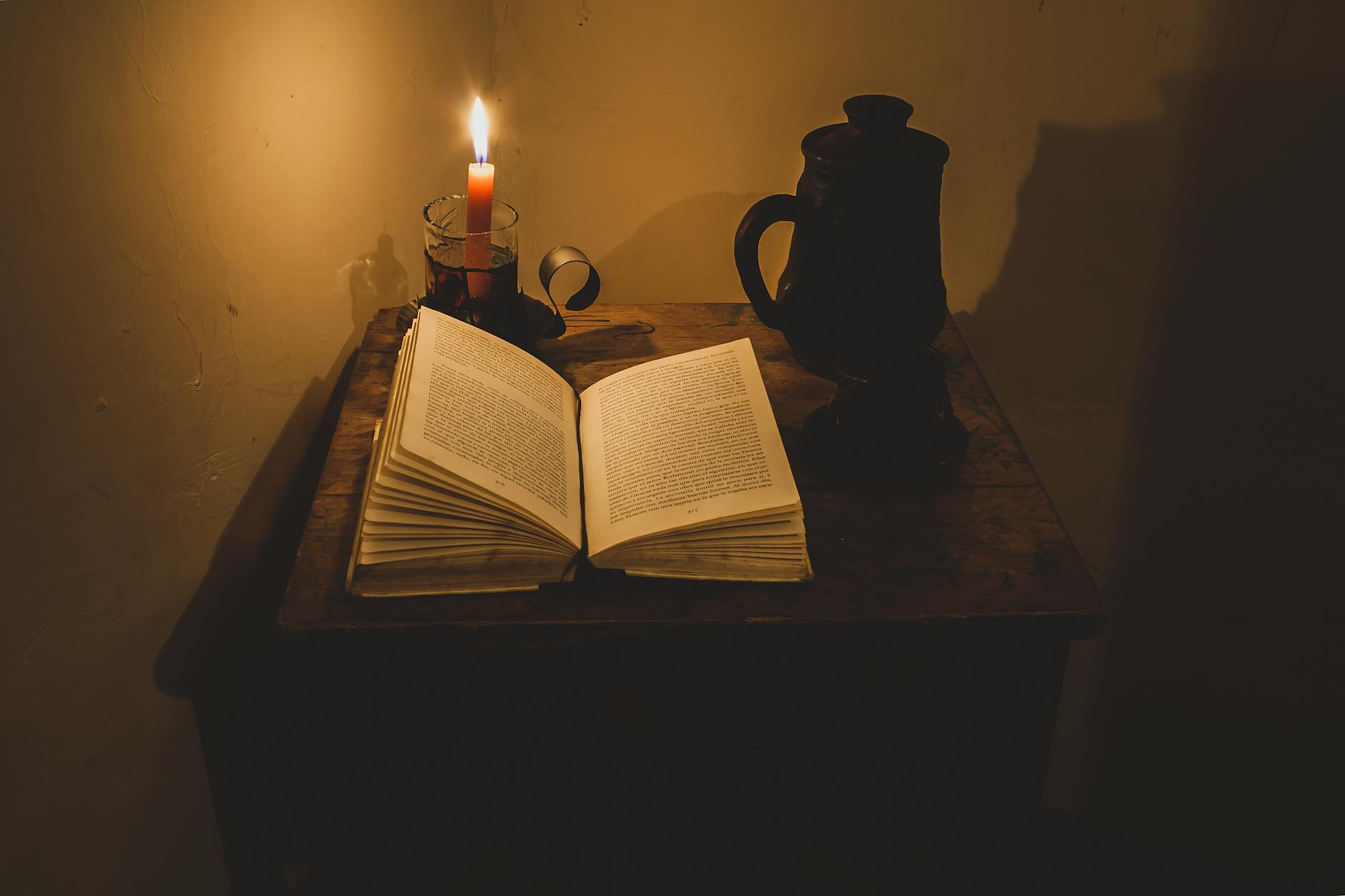
The Hávamál — the Sayings of the High One — is the longest and most quoted of the wisdom-poems in the Poetic Edda. It is, depending on how you count, somewhere between 165 and 170 stanzas. It is attributed to Óðinn. Its first eighty or so stanzas are gnomic — short bits of practical advice about guesting, drinking, hospitality, travel, and the management of a life. The remainder moves into myth and magic: Óðinn on the tree, Óðinn's learning of the runes, Óðinn's eighteen secret charms.
It is usually read as advice to men. The stanzas address someone who goes to the hall, travels the road, watches for enemies, receives guests. The translators and commentators have read this as a masculine voice speaking to a masculine audience.
I want to propose a different reading. The Hávamál is a corpus of practical wisdom for running a life in a dangerous century. Who in the Old Norse household was practically running the life? Who was deciding which guests were welcome, how much ale they got, what was worth saying at table, what was worth keeping silent about? The answer is in the last essay I wrote: the húsfreyja. The Hávamál describes the social world the householder managed, and the householder in that world was two people in counterpoint — the bóndi and the húsfreyja. Reading it only as advice to men is reading half the audience.
Stanza 1 — the guest stanza, really about vigilance
The first stanza of the Hávamál, in Carolyne Larrington's translation, reads:
All the doorways, before one goes forward,
one should look at, one should spy out;
one can't know for certain where enemies are sitting
ahead in the hall.
This is usually read as the traveller's stanza — the warrior entering an unfamiliar hall. But it reads differently if you have ever been the woman receiving guests. Every person who comes through your door is someone about whom you need to know: what they want, what they remember, what they might say when the ale is working. You are responsible for the composition of the room. You have to see it before you enter it.
The stanza is about vigilance, not paranoia. The world of the hall was a world where violence happened suddenly, at feasts, when drink and grudge met. The woman who missed the warning sign before her husband did, and intervened, saved the farm. This stanza is her technique.
Stanza 19 — at table
A man shouldn't hold on to the cup but drink mead in moderation,
he should be silent or talk sense;
no one will reproach you for discourtesy
if you go early to sleep.
The modern reader is tempted to read this as advice about drunkenness. It is more than that. It is advice about composure. The house ran on these evenings — information was exchanged, alliances were renewed, grievances were raised and (ideally) resolved. Someone who drank too much and talked badly did damage that had to be repaired the next day. A woman sitting at such a table had to maintain her composure for longer than anyone else, because she was the one making sure everyone else could leave the table with their face intact.
"He should be silent or talk sense" is one of the most useful instructions in the whole corpus. I repeat it to myself before almost every social occasion.
Stanzas 76–77 — cattle die, kinsmen die
These two stanzas are the most famous in the whole text, and they hit harder, I think, in a woman's mouth than in a man's:
Cattle die, kinsmen die,
you yourself will die too;
but fame never dies, for the one who gets it well.Cattle die, kinsmen die,
you yourself will die too;
I know one thing, which never dies:
the reputation of each one dead.
The received reading treats these as warrior-glory stanzas. The reputation that outlasts death is the reputation of the slayer. But read them through the lament tradition — through the poem a mother would speak over her son, a sister over her brother, a wife over her husband — and they become something else. They become the statement that your life leaves a shape, and that the shape is what outlives you, and that the people who remember the shape are the people who loved you.
That is not a warrior's boast. That is the grief and the comfort of the women who stayed behind. It is a lament disguised as a stoicism, which is, historically, how lament often gets preserved when the culture is not comfortable with lament on its face.
Stanza 80 — on runes
It is proven, when you ask concerning runes,
the divinely-descended ones, those which the powerful ones made
and the mighty sage coloured,
that it is best if he is silent.
Larrington's version is more careful than most of what you will find in popular translations. The stanza says: when you ask about runes, silence is best. Not always. When the question is the rune question. Not every question should be asked of the runes, and not every rune-answer should be spoken aloud. This is the same caution the last essay I wrote, on rune-reading, was trying to convey. Here it is attributed to Óðinn himself.
Reading practice
If you are coming to the Hávamál for the first time, I would suggest this: get Larrington's translation (Oxford World's Classics, revised 2014). Read five or six stanzas at a sitting. Read them more than once. Some will strike you immediately. Others will feel opaque; those are the ones worth sitting with for a month.
Do not read it as a book of spells. Do not read it as a pagan Bible. Read it as a handbook written by someone — call him Óðinn if you like — who had watched human social life for a long time and was describing what he had seen. The advice is blunt. Some of it is uncomfortable. Most of it is still true.
Closing
The Hávamál was not written for women, in the sense that women did not write it. But it was written about a world in which women were half the managers, half the information network, half the eyes at the door. The advice is addressed to whoever in the house is watching. That is you too.
Leave a note in the margin
Thoughtful disagreement welcomed. Promotional links quietly removed. First-time notes are read before they appear.