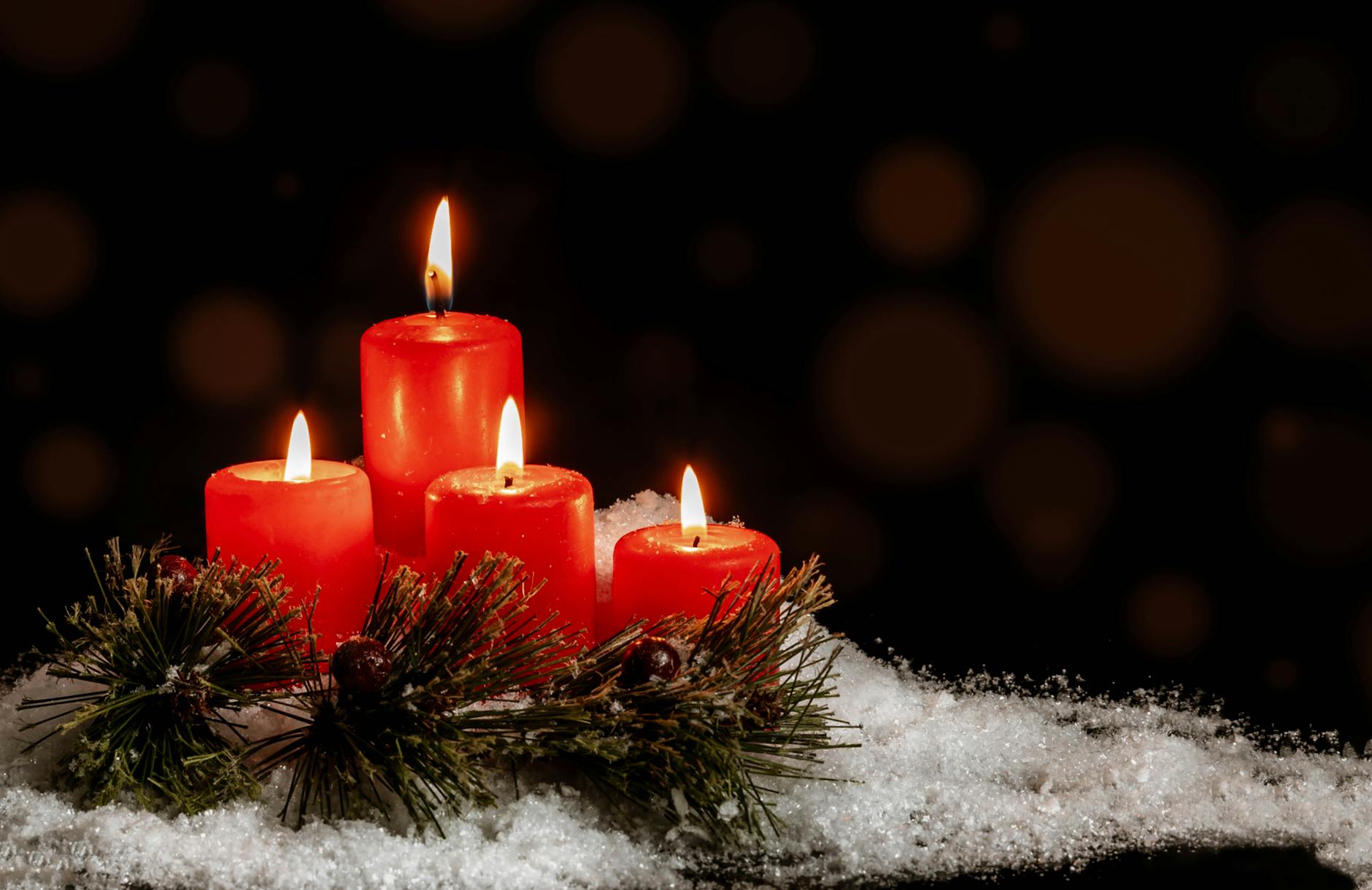
Most women I know who are returning to the old ways grew up with Christmas. Maybe devout Christian Christmas; maybe secular tree-and-presents Christmas; maybe an ambivalent Christmas with a complicated mother and a fraught dinner. Whatever the shape of it, Christmas is in the bones.
The question of what to do with Christmas now is one of the first practical questions the older tradition puts to you. I want to argue for a middle path: do not capitulate, do not cosplay, keep Yule under your Christmas. Here is what I mean.
What Christmas actually is
Christmas, as a Christian feast, was grafted onto the pre-Christian winter festivities of northern Europe in the fourth century. The actual birth of Jesus is nowhere given in the Gospels with a date; the early church, looking for a feast-day that would absorb the existing midwinter celebrations across its spreading territory, settled on 25 December — which was already, for various reasons, a festival day under several older calendars. The Roman Sol Invictus, the Germanic midwinter observances, the Celtic calendar: all were rolled into the new feast.
This is not a secret or a conspiracy. It is ordinary religious history. The church knew what it was doing, and it did it effectively. Several features of contemporary Christmas — the evergreen tree, the kept fire, the feasting with the dead in mind, the exchange of gifts that mark household and kin — are continuous with practices that predate the Christian graft by a thousand years.
What Yule actually is
Yule, Jól in Old Norse, was a twelve-night observance in the pre-Christian Scandinavian calendar. I have written about it at more length on the Yule page, but in brief: it was the year's most important feast; it was held at midwinter; it centred on the remembering of the dead, the keeping of fires, the brewing of special ale, and the toasting of the gods and of departed kin. It ran from the solstice (or thereabouts) through what is now our New Year.
The word "Yule" survives in English as a poetic alternative name for Christmas. In Scandinavia, the feast is still called Jul and is recognisably the same feast the pre-Christians kept. In the English-speaking Christian world, the older feast is largely absent from awareness.
How to keep them both
The question is practical, not theological. If your family gathers on 25 December for a roast and presents and you love them, you do not have to blow up that gathering. What you can do is keep Yule as well, on its own terms, on its own schedule.
- Keep the solstice night specifically. 21 or 22 December depending on the year. This is Yule's actual turning point, regardless of what your family does three or four days later. Light a candle. Name the dead. Sit with the dark half of the year at the exact moment it pivots.
- Claim the evergreens for the older feast. The tree, the holly, the ivy, the mistletoe — these are yours from a tradition that predates the Christian use. You do not have to explain this to your family. You can just know it.
- Toast the dead at table. At whatever family gathering you attend, raise your cup silently or aloud to someone in your line who is gone. This is what Yule is for. It does not require a pagan altar.
- Keep the twelve nights. Jól ran for twelve nights. So does the Twelve Days of Christmas. You can observe either frame. The point is that one night of feasting is not the feast; the feast is a twelve-day introversion into the dark half of the year, during which work is set down and people matter.
What to do with family who will not understand
In most cases, do nothing. Do not announce. Do not argue about it. The older tradition was quiet. You can keep a vigil on the solstice without anyone in your household knowing that is what you are doing. The rite does not require an audience.
If family asks — if someone notices that you are lighting a candle at an unusual hour — tell them you are keeping an older feast, one your people kept before they kept the Christian one. This is almost always accurate and is very difficult to argue with, because it is historically true of nearly everyone with European ancestry.
You are not rejecting Christmas. You are keeping both.
A middle-path practice
What I do, and what I recommend:
- On the solstice (21 or 22 December): light one candle at sundown and keep it lit through the evening. Name the dead who matter to me. Write one small private note in a notebook about the year that is closing.
- On 24 December (Christmas Eve in most traditions): attend whatever family gathering is happening. Do not perform paganism there. Just be present. Keep a silent toast in mind when the family toast is made.
- On 25 December: the Christmas Day you were given. Enjoy it. Your grandmother fought to give you this day in this shape. You do not owe paganism her cost.
- Between 25 December and 6 January: keep the lights low, eat slowly, read. The older feast is a long quiet. The Christian calendar agrees; these are the twelve days.
- On the night of 5–6 January (twelfth night): burn the Yule candle out. Mark that the old year is closed.
This is not elaborate. It is also not a capitulation. It holds both feasts under one roof, which is what they have historically had to do in this part of the world since the fourth century.
Closing
Christmas is what most of us were given. Yule is what is underneath. You can keep both without either being diminished. The older instinct survives in the newer feast; the woman who notices the solstice is the same woman who can still enjoy the Christmas dinner.
The work is not to choose between them. The work is to know what you are keeping, and why.
Leave a note in the margin
Thoughtful disagreement welcomed. Promotional links quietly removed. First-time notes are read before they appear.